Jabal Fayfa
|
Jabal Fayfa |
|
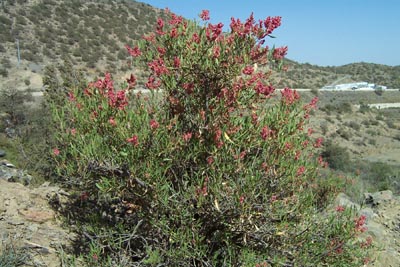
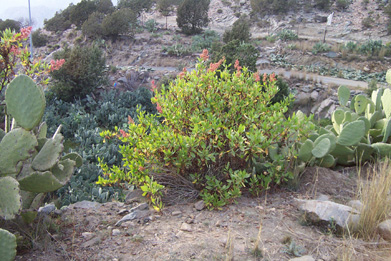
Fayfa Mountain ('Jabal Fayfa', 170 14` N – 430 05` E) in Jazan Province is one of the important plant diversity centers of the southwestern Saudi Arabia. It is characterized by a mosaic environment and possesses a relatively rich and diverse flora. These undulating mountains range in elevation from 900 m (Al-Ghardha) to about 2000 m (Al-Abseeya) and extend over several kilometers along a roughly north-south axis. On the southern side, these mountains join the mountains of Yemen and on the north with the mountains of Bani Malik. To the west of these mountains lie the Tihama coastal plains, an arid land with sparse vegetation. Compared to the eastern side, the west facing slopes of the mountains are steep and are characterized by dense vegetation. The eastern slopes are the rain shadow regions and are less species rich. Fayfa Mountains is not a single steep escarpment but a series of mountain ranges cut by deep valleys. The hillocks on the outer side of the mountain range are less than 700 m high. The vegetation on these hillocks is somewhat sparse and in a highly degraded state due to heavy grazing and flash-floods. Further east, the region has another set of mountains with altitudes ranging from 800-1200m. Top soil in this part is also highly altered as it eroded away in heavy rains. Vegetation in these mountains is not strikingly rich. Yet, scattered and occasionally dense vegetation can be seen on open and eroded slopes of the escarpment. The interior part of the escarpments is somewhat steep with an average height of about 2000m. The mountains of Fayfa harbor a rich flora that is more or less similar to that of Yemen and nearby countries in Africa such as Ethiopia, Eritrea, etc. The west facing slopes, which benefit from constant moisture-laden breezes from the Red Sea hold several micro hotspots and sustain a number of endemics and several endangered species; these include a few remaining stands of the vulnerable species such as Dracaena ombet, Dorstenia foetida, Ceropegia spp., etc. Jabal Fayfa is differentiated into a spectrum of climatic zones, each with a distinct vegetation cover. The vegetation of the foothills is rather sparse and highly degraded due to heavy grazing and flash floods. Further east, the area is thrown into a set of mountains with altitudes ranging from 800 to 1200 m. Although the flora in these areas is not strikingly rich, occasional dense vegetation is not uncommon on open and eroded slopes of the escarpments. The interior of the escarpment is somewhat steep. Dominant members of the vegetation between 1500-2000 m include: Juniperus procera, Ficus sycomorus, Acacia mellifera, A. seyal, Euclea schimperi and Carissa edulis. The entire Fayfa Mountain range is divided into three regions, i.e. low lying mountains (up to 1000m), high altitude wadis and escarpments. The vegetation of the low lying areas is dominated by Acacia etbaica along with occasional trees of A. mellifera and A. asak. Commiphora spp. and Acacia ehrenbergiana are the main components of the hills below 500-900m. Other trees such as A. abyssinica, Combretum molle, Tichellia emetica, Tamarindus indica, Ziziphus spina-christi, Dobera glabra, Mimusops laurifolia and Delonix elata are also dominant but in small restricted localities of the west facing slopes. In the Acacia-Commiphora bushland, which is dominating in the low altitude, several species of shrubs are also found in great abundance. Adenium arabicum, Anisotes trisulcus, Grewia tembensis, Maerua oblongifolia, Acalypha fruticosa are some of them. Majority of abandoned agricultural terraces possess secondary vegetation. Important plants of this group include: Solanum schimperianum, Clutia lanceolata, Solanum incanum, Ricinus communis, Commiphora spp., Carissa edulis, Otostegia fruticosa, Rumex nervosus, etc. Herbaceous flora includes Evolvulus alsinoides, Anagallis arvensis, Chenopodium spp., Conyza stricta, Pennisetum setaceum, Themeda triandra. Agricultural terrace walls also possess a distinctive flora of their own. The most common plants of this category are Campanula edulis, Micromeria imbricate, Reichardia tingitana, Asplenium aethiopicum, Conzya pyrrhopappa, Nepeta deflersiana, etc. Vegetation of high altitude (c. 2000m) areas is in a highly degraded state due to urbanization. However, patches of vegetation dominated by trees such as Juniperus procera, Olea europaea, Ficus sycomorus, Dracaena ombet, etc can be found in certain localities. In addition to the tree components, shrubs and woody herbs are also widely distributed along the escarpments. These include: Otostegia fruticosa, Psiadia punctulata, Teucrium yemense, Tagetus minuta, Dodonaea angustifolia, Pluchea dioscoridis, Pulicaria schimperi, Plectranthus asirensis, etc and grasses such as Themeda triandra, Hyparrhenia hirta, Tetrapogon villosus, Sporobolus nervosus and Rhynchelytrum repens. Dense vegetation is virtually absent in the entire east facing slopes. However, succulent shrubs such as Aloe spp. Euphorbia spp., etc. can be found in most of the areas along with Acacia asak and occasionally Moringa peregrina trees 537 species of vascular plants have been recorded from the area, which represents about 24% of the total collections so far recorded from the entire floristic region of Saudi Arabia. Unlike the flora of other regions of Saudi Arabia where the majority is represented by annuals, two-thirds of the flora of the Jabal Fayfa is represented by perennials. Fabaceae is the largest family with 51 species followed by Poaceae and Asteraceae with 47 and 46 species, respectively. (Courtesy- A prelude to the study of the flora of Jabal Fayfa in Saudi Arabia by Dr. T.A. Al-Turki) |
||||||||||
|
||||||||||
Species recorded from Jabal Fayfa.First record from Jabal Fayfa (*); endemic-endangered (^); non-endemic-endangered (#); endemic not endangered (+). |
||||||||||
|
Pteridophytes |
||||||||||
ActinopteridaceaeActinopteris radiata (Swartz) Actinopteris semiflabellata Pichi-Sermoli AdiantaceaeAdiantum capillus-veneris L. Adiantum incisum Forssk. Cheilanthus coriacea Decne. Cheilanthes pteridioides (Reichards) C. Chr. Cosentina vellea (Ait.) Tod. AspleniaceaeAsplenium aethiopicum (Burm.f.) Becherer Asplenium officinarum L.
|
Dryopteridaceae# Hypodematium crenatum (Forssk.) Kuhn
SelaginellaceaeSelaginella imbricata (Forssk.) Spring Selaginella yemensis (Swartz) Spring
|
|||||||||
Gymnosperms |
||||||||||
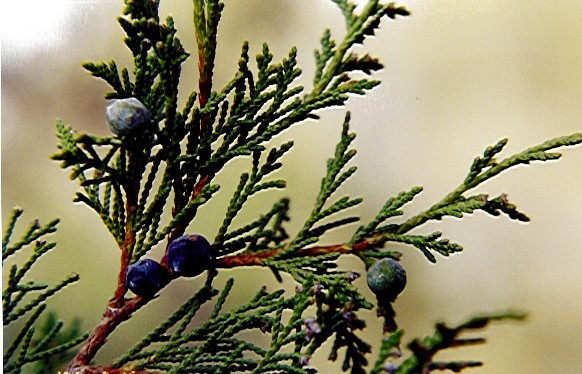
CupressaceaeJuniperus procera Hochst. ex Endl. |
|
|||||||||
AngiospermsDicotyledons |
||||||||||
|
Acanthaceae+ Anisotes trisulcus (Forssk.) Nees Barleria acanthoides Vahl + Barleria bispinosa (Forssk.) Vahl # Barleria prionitis L. ssp. appressa (Forssk.) Brummitt & J.R.I. Wood. + Barleria trispinosa (Forssk.) Vahl Blepharis ciliaris (L.) B.L. Burtt # Blepharis madraspatensis (L.) Heyne ex Roth. Crossandra johanninae Fiori Ecbolium viride (Forssk.) Alston Hypoestes forskalei (Vahl) Soland. ex Roem & Schult. Justicia caerulea Forssk. Justicia flava (Vahl) Vahl # Monechma debile (Forssk.) Nees Peristrophe paniculata (Forssk.) Brummit # Phaulopsis imbricata (Forssk.) Sweet. Ruellia patula Jacq. Ruellia prostrata T. Anderson
AizoaceaeCorbichonia decumbens (Forssk.) Exell Gisekia pharnaceoides L. Glinus lotoides L. Mollugo cerviana (L.) Seringe. Trianthema crystallina (Forssk.) Vahl Zaleya pentandra (L.) C. Jeffrey
AmaranthaceaeAchyranthes aspera L. var. aspera Aerva javanica (Burm.f.) Juss. ex Schult. Aerva lanata (L.) A. Juss. ex. Schults Alternanthera pungens Kunth. Amaranthus graecizans L. ssp. sylvestris (Vill.) Brenan Amaranthus hybridus ssp. hybridus L. Amaranthus spinosus L. Amaranthus viridis L. # Celosia trigyna L. Digera muricata (L.) Mart. Pupalia lappacea (L.) A. Juss.
AnacardiaceaeRhus abyssinica Hochst. ex Oliv. * Rhus retinorrhaea Steud. ex Oliv. Schinus molle L. Schinus terebinthifolius Raddi
Annonaceae # Annona squamosa L.
ApiaceaeFoeniculum vulgare Mill. Pimpinella eriocarpa Banks et Sol. Pimpinella hirtella (Hochst.) A. Rich. Pimpinella peregrina L. Pimpinella schweinfurthii Asch. Torilis arvensis L.
ApocynaceaeAcokanthera schimperi (A. DC.) Benth. + Adenium arabicum Balf.f. Carissa edulis (Forssk.) Vahl.
Asclepiadaceae# Angolluma deflersiana (Lavr.) Plowes # Angolluma eremastrum (Swartz) Plowes. Calotropis procera (Aiton) W.T. Aiton # Ceropegia arabica Huber var. arabica Cynanchum gerrardii (Harvey) Liede Desmidorchis retrospiciens (Forssk.) Plowes Gomphocarpus sinaicus Boiss. Kanahia laniflora (Forssk.) R.Br. Leptadenia arborea (Forssk.) Schweinf. Leptadenia pyrotechnica (Forssk.) Decne. Pergularia daemia (Forssk.) Chiov. Periploca somaliensis Browicz + Sarcostemma viminale (L.) R.Br. ssp. stipitaceum (Forssk.) Meve & Liede
Asteraceae* Artemisia abysinthium L. Bidens biternata (Lour.) Merr. & Sherff. Bidens pilosa L. Conyza bonariensis (L.) Cronq. Conyza hochstetteri Sch.-Bip. ex A. Rich. Conyza incana (Vahl) Willd. Conyza pyrrhopappa Sch.-Bip. ex A. Rich. Conyza stricta Willd. Crepis ruepellii Sch.-Bip. Dichrocephala chrysanthemifolia (Blume) DC. * + Echinops erinaceus Kit Tan Eclipta prostrata (L.) L. Felicia dentata (A.Rich.) Dandy Filago pyramidata L. Flaveria trinervia (Spreng.) Mohr. Gnaphalium luteo-album L. Helichrysum glumaceum DC. Kleinia anteuphorbium (L.) DC. # Kleinia pendula (Forssk.) DC. Lactuca dissecta D. Don Lactuca inermis Forssk. Lactuca serriola L. Launaea intybacea (Jacq.) Beauverd Launaea massauensis (Fresen.) Sch.-Bip. ex Kuntze Launaea procumbens (Roxb.) Ramayya & Rajagopal Phagnalon schweinfurthii Sch.-Bip. var. androssovii (B. Fedtsch.) Qaiser & Lack. Phagnalon stenolepis Chiov. Picris cyanocarpa Boiss. Pluchea dioscoridis DC. Psiadia punctulata (DC.) Vatke Pulicaria undulata (L.) C.A. Mey Pulicaria petiolaris Jaub. & Spach. Pulicaria schimperi DC. Reichardia tingitana (L.) Roth var. arabica (Hochst. & Steud.) Asch. & Schweinf. + Senecio asirensis Boulos & Wood Senecio bojeri DC. Senecio hadiensis Forssk. # Senecio lyratus Forssk. Sonchus oleraceus L. Sonchus saudensis Boulos * Sonchus tenerrimus L. Tagetes minuta L. Tridax procumbens L. Vernonia cinerea (L.) Less. Vernonia cinerascens Sch.-Bip Vernonia schimperi Sch.-Bip
BoraginaceaeAlkanna orientalis (L.) Boiss. Arnebia hispidissima (Lehm.) DC. # Cordia africana Lam. Cynoglossum bottae Deflers Cynoglossum lanceolatum Forssk. # Ehretia abyssinica R.Br. ex Fresen. # * Ehretia obtusifolia Hochst. Heliotropium longiflorum Hochst. & Steudel Heliotropium pterocarpum (DC.) Steud. & Hochst. ex. Bunge Heliotropium strigosum Willd. Heliotropium subulatum (DC.) Vatke
BrassicaceaeArabis alpina L. # Brassica juncea (L.) Czern. & Coss. Erucastrum arabicum Fisher & C. Meyer Lepidium africanum (Burm.f.) DC. # Lepidium bonariense L. Sisymbrium erysimoides Desf. Sisymbrium irio L. Sisymbrium orientale L.
BurseraceaeCommiphora habessinica (O. Berg.) Engl. Commiphora kataf (Forssk.) Engl. Commiphora myrrha (Nees) Engl. Commiphora quadricinta Schweinf.
CactaceaeOpuntia dillenii (Ker-Gawl.) Haw. Opuntia ficus-indica (L.) Miller
CelastraceaeCatha edulis (Vahl) Forssk. Ex Endl. Maytenus arbutifolia (Hochst. ex A. Rich.) Wilczek. Maytenus forsskaoliana Sebsebe Maytenus senegalensis (Lam.) Exell. Maytenus sidamoensis (Sebsebe) S. Abedin
Caesalpiniaceae# Chamaecrista mimosoides (L.) Greene Delonix elata (L.) Gamble. # * Pterolobium stellatum (Forssk.) Brenan Senna alexandrina Mill. Senna occidentalis (L.) Link. Tamarindus indica L.
CampanulaceaeCampanula edulis Forssk.
CapparaceaeCapparis sinaica Veill. Cleome gynandra L. Cleome scaposa DC. Cleome viscosa L. Maerua crassifolia Forssk. Maerua oblongifolia (Forssk.) A. Rich. # Maerua triphylla A. Rich. var. calophylla (Gilg)De Wolf.
Caryophyllaceae Cerastium glomeratum Thuill # Pollichia campestris Ait. Polycarpon tetraphyllum (L.) L. # Silene apetala Willd. Silene schweinfurthii Rohrb.
ChenopodiaceaeChenopodium album L. Chenopodium ambrosioides L. Chenopodium carinatum R.Br. Chenopodium fasciculosum Aellen Chenopodium murale L. * Chenopodium schraderianum Schult.
Combretaceae* Combretum molle R.Br. ex G. Don. Terminalia brownii Fresen.
Convolvulaceae# Astripomoea malvacea (Klotzsch) Meeuse Evolvulus alsinoides (L.) L. Ipomoea eriocarpa R.Br. Ipomoea obscura (L.) Ker.-Gawl. Ipomoea sinensis ssp. sinensis (Desv.) Choisy Seddera arabica (Forssk.) Choisy
CrassulaceaeCrassula alba Forssk. Crassula schimperi C.A. Mey Kalanchoe alternans (Vahl) Pers Kalanchoe citrina Schweinf. Kalanchoe crenata (Andrews) Haw. Kalanchoe deficiens (Forssk.) Asch. & Schweinf. Kalanchoe glaucescens Britten # Kalanchoe laciniata (L.) DC. Kalanchoe lanceolata (Forssk.) Pers.
CucurbitaceaeCitrullus colocynthis (L.) Schrad. Coccinia grandis (L.) Voigt Corallocarpus epigaeus (Rottler) Hook. F. ex C.B. Clarke Cucumis dipsaceus Spach. Cucumis melo L. Cucumis prophetarum L. Cucumis pustulatus Hook.f. Kedrostis foetidissima (Jacq.) Cogn. Momordica balsamina L.
Ebenaceae# Diospyros mespiliformis Hochst. ex DC. * Euclea schimperi (DC.) Dandy.
EuphorbiaceaeAcalypha ciliata Forssk. Acalypha fruticosa var. villosa Pax ex. Hutch. Acalypha indica L. Acalypha racemosa Wall. ex Baill Chrozophora oblongifolia (Delile) Spreng. Clutia lanceolata Forssk. # Croton lobatus L. Dalechampia scandens L. var. cordofana (Webb) Muell.-Arg. # Erythrococca abyssinica Pax Euphorbia ammak Schweinf. Euphorbia cactus Ehrenb. ex Boiss. Euphorbia granulata Forssk. Euphorbia hirta L. Euphorbia hypericifolia L. # Euphorbia inaequilatera Sond. Euphorbia inarticulata Schweinf. Euphorbia schimperiana Scheele Euphorbia triaculeata Forssk. Jatropha curcas L. Jatropha glauca Vahl Phyllanthus maderaspatensis L. Phyllanthus rotundifolius Willd. Phyllanthus nummularifolius Poir. Ricinus communis L. Tragia pungens (Forssk.) Muell.-Arg.
Flacourtiaceae# Oncoba spinosa Forssk.
GentianaceaeCentaurium mairei Zeltner Enicostemma axillare (Lam.) A. Raynal
GeraniaceaeGeranium biuncinatum Kokwaro Geranium mascatense Boiss. Pelargonium multibracteatum Hochst ex A. Rich.
Hypericaceae# Hypericum annulatum Moris
LamiaceaeEndostemon tereticaulis (Poir.) Ashby # Lavandula atriplicifolia Benth. Lavandula coronopifolia Poir. Lavandula pubescens Decne. Leucas alba (Forssk.) Sebald. Leucas martinicensis R.Br. Leucas urticifolia (Vahl) R.Br. Micromeria abyssinica Benth. Micromeria imbricata (Forssk.) O. Chr. Ocimum americanum L. Ocimum filamentosum Forssk. Ocimum forskolei Benth. Ocimum serpyllifolium Forssk. Orthosiphon pallidus Royle ex Benth. Orthosiphon thymiflorus (Roth) Sleesen Otostegia fruticosa ssp. schimperi (Benth.) Sebald # Plectranthus arabicus E.A. Bruce. Plectranthus asirensis J.R.I. Wood Teucrium yemense Defl.
LauraceaeCassytha filiformis L.
LinaceaeLinum corymbulosum Reich. * Linum trigynum L.
Loganiaceae Nuxia oppositifolia (Hochst.) Benth.
Loranthaceae * Phragmanthera austroarabica A.G. Miller * Tapinanthus globiferus (A. Rich.) Tiegh.
LythraceaeLawsonia inermis L.
MalvaceaeAbutilon bidentatum A. Rich. Abutilon fruticosum Guill. & Perr. Abutilon muticum (Del. ex DC.) Sw. # Abutilon ramosum Guill. & Perr. # Gossypium hirsutum L. Hibiscus aponeurus Sprague & Hutch Hibiscus aristaevalvis Garcke # Hibiscus calyphyllus Cav. Hibiscus deflersii Schweinf. ex Cufod. Hibiscus micranthus L.f. Hibiscus meidiensis Ulbr. Hibiscus vitifolius L. Pavonia burchellii (DC.) R.A. Dyer Pavonia procumbens (Wall. ex Wight & Arn.) Wallp. Sida alba L. Sida alii S. Abedin Sida ovata Forssk.
MeliaceaeAzadirachta indica A. Juss. Melia azedarach L. Trichilia emetica Vahl |
MimosaceaeAcacia abyssinica Hochst. Acacia asak (Forssk.) Willd. Acacia ehrenbergiana Hayne Acacia etbaica Schweinf. Acacia gerrardii Benth. Acacia hamulosa Benth. Acacia mellifera (Vahl) Benth Acacia oerfota (Forssk.) Schweinf. * Acacia origena Asfaw Acacia seyal Del. Acacia tortilis (Forssk.) Hayne Dichrostachys cinerea (L.) Wight & Arn. MoraceaeDorstenia foetida (Forssk.) Schweinf. Ficus cordata ssp. salicifolia (Vahl) C.C. Berg. * Ficus ingens (Miq.) Miq. Ficus palmata Forssk. Ficus sycomorus L. * Ficus vasta Forssk.
Myrsinaceae# Myrsine africana L.
NyctaginaceaeBoerhavia diffusa L. Boerhavia repens L. * # Commicarpus ambiguus Meikle Commicarpus arabicus Meikle Commicarpus grandiflorus (A. Rich.) Standeley Commicarpus helenae (Roem.&Schultes) Meikle # Commicarpus mistus Thulin Commicarpus plumbagineus (Cav.) Standley
OleaceaeJasminum grandiflorum L. * Olea europaea L. ssp. cuspidata (Wall. ex G. Don) Ciferri
OrobanchaceaeOrobanche ramosa L.
Oxalidaceae Oxalis corniculata L.
PapaveraceaeArgemone mexicana L.
PapilionaceaeAbrus bottae Defl. # Abrus precatorius L. Argyrolobium arabicum (Decne.) Jaub. & Spach Astragalus atropilosulus (Hochst.) Bunge Astragalus fatmensis (Hochst.) ex Chiov Astragalus vogelii (Webb.) Bornm. Crotalaria incana L. Crotalaria pycnostachya Benth. # Crotalaria quartiniana A. Rich. # Crotalaria senegalensis (Pers.) DC. # Desmodium gangeticum (L.) DC. Dolichos trilobus L. Glycine wightii ssp. wightii var. longicauda (Schweinf.) Verd. Indigofera amorphoides Jaub. & Spach Indigofera arabica Jaub. & Spach Indigofera arrecta Hochst. ex A. Rich. Indigofera articulata Gouan Indigofera caerulea var. occidentalis Gillet & Ali Indigofera colutea (Burm.f.)Merr. Indigofera hochstetteri Baker Indigofera oblongifolia Forssk. Indigofera spicata Forssk. Indigofera spinosa Forssk. Indigofera tinctoria L. Indigofera trita L.f. var. maffeii (Chiov.) Ali Indigofera volkensii Taub. Lablab purpureus (L.) Sw. ^ Lotus arabicus L. Lotus gebelia Vent. Lotus halophilus L. Macrotyloma axillare (E. Mey) Verdc. var. axillare Medicago lupulina L. * Melilotus alba Medic. * Melilotus indica (L.) All. * Melilotus officinalis (L.) Pall. Phaseolus lunatus L. Rhynchosia buramensis Hutch. & Bruce Rhynchosia pulverulenta Stocks. Rhynchosia totta (Thunb.) DC. Syn.: Glycine totta Thunb. ^ Rhynchosia variegata (Defl.) Wood. Sesbania sesban (L.) Merr. # Stylosanthes fruticosa (Retz.) Alston Tephrosia pumila (Lam.) Pers. Tephrosia purpurea (L.) Pers. ssp. apollinea (Del.) Hosni & El Karemy # Tephrosia subtriflora Hochst. ex Bak. Tephrosia uniflora Pers. ssp. petrosa (Blatt. & Hallib.) C.J.B.Gillett & Ali Teramnus labialis (L.f.) Spreng. ssp arabicus Verdc. Teramnus repens ssp. gracilis (Chiov.) Verdc. Vermifrux abyssinica (A. Rich.) Gillett Vigna ambacensis Welw. ex Bak. Vigna membranacea A.Rich.
Plumbaginaceae * # Plumbago zeylanica L.
Polygalaceae Polygala abyssinica R.Br. ex Fresen. Polygala erioptera DC. Polygala senensis Klotzsch. Polygala tinctoria Vahl
Polygonaceae Emex spinosa (L.) Campd. Oxygonum sinuatum (Meisn.) Dammer Rumex nervosus Vahl Rumex steudelii Hochst. ex A. Rich.
PortulacaceaePortulaca oleracea L. Portulaca quadrifida L. Talinum portulacifolium (Forssk.) Asch.
PrimulaceaeAnagallis arvensis L.
Ranunculaceae Clematis hirsuta Guill & Perr.
Resedaceae Ochradenus baccatus Del. + Reseda sphenocleoides Defl. RhamnaceaeBerchemia discolor (Klotzch)Hemsl. Sageretia thea (Osbeck) Johnst. Ziziphus spina-christi (L.) Willd.
RosaceaePrunus dulcis (Mill.) D.A. Webb. Prunus communis (L.) Arc. Rosa abyssinica Lindley
RubiaceaeCoffea arabica L. Kohautia aspera (Heyne ex Roth) Bremekamp Kohautia caespitosa Schnitzl. Oldenlandia capensis L.f. var. capensis # Oldenlandia corymbosa L. Pavetta longiflora Vahl Pentas lanceolata (Forssk.) Deflers. Psydrax schimperiana (Rich.) Bridson Pyrostria phyllanthoidea (Baill.) Bridson Tarenna graveolens ssp. arabica (Cuf.) Bridson
SalvadoraceaeDobera glabra (Forssk.) Juss. ex Poir. Salvadora persica L.
Sapotaceae# Mimusops laurifolia (Forssk.) Friis
Scropulariaceae * Antirrhinum orontium L. + Anarrhinum forskalii (J.F. Gmel.) Cufod. Bacopa monnieri (L.) Pennell. Craterostigma pumilum Hochst. Kickxia hastata (R.Br.) Dandy Lindenbergia indica (L.) Kuntze Schweinfurthia pterosperma A. Braun. Striga hermonthica (Del.) Benth. Verbascum bottae (Deflers) Huber-Mor. Veronica anagallis-aquatica L. * Veronica polita Fries V. didyma auct, non Ten.
SolanaceaeDatura metel L Nicotiana tabacum L. Physalis minima L. Solanum forskalii Dunal Solanum glabratum Dunal. Solanum incanum L. var. incanum Solanum nigrum L. Solanum schimperianum Hochst. ex Dun Solanum surattense Burm.f. Solanum villosum (L.) Mill. Withania somnifera (L.) Dunal
Sterculiaceae Melhania acuminata Mast. Melhania incana Heyne # Melhania velutina Forssk. # Waltheria indica L.
Tamaricaceae Tamarix nilotica (Ehrenb.) Bge.
TiliaceaeCorchorus depressus (L.) Christ. Corchorus tridens L. Corchorus trilocularis L. Grewia mollis Juss. Grewia tembensis Fresen *Grewia trichocarpa Hochst ex A. Rich Grewia velutina (Forssk.) Vahl Grewia villosa Willd. Triumfetta rhomboidea Jacq.
VerbenaceaeChascanum marrubifolium Fenzl ex Walp. Lantana camara L. Lantana petitiana A. Rich. Lantana viburnoides (Forssk.) Vahl Phyla nodiflora (L.) Greene. Premna resinosa (Hochst.) Schau. Priva cordifolia (L.f.) Druce
Ulmaceae* Celtis africana Burm.f * # Trema orientalis (L.) Bl.
UrticaceaeForsskaolea tenacissima L. Forsskaolea viridis Ehrenb. Parietaria alsinifolia Del. ^ Parietaria umbricola A.G. Miller Urtica urens L.
VitaceaeCissus quadrangularis L. Cissus rotundifolia (Forssk.) Vahl Cyphostemma digitatum (Forssk.) Desc. Rhoicissus revoilii Planchon # Rhoicissus tridentata (L.f.) Wild. & Drummon
ZygophyllaceaeFagonia indica Burm. f. Zygophyllum simplex L.
Monocotyledons
AgavaceaeDracaena ombet Kotschy & Peyr. Sansevieria ehrenbergii Schweinf. ex Baker
AmaryllidaceaeScadoxus multiflorus (Martyn) Raf.
Commelinaceae Commelina africana L. Commelina benghalensis L. Commelina erecta L. Commelina forskaolii Vahl Cyanotis nyctitropa Deflers. CyperaceaeCyperus dubius ssp. macrocephalus (C.B. Clk.) Lye. Cyperus jeminicus Rottb. Cyperus niveus Retz. Cyperus rotundus L Cyperus rubicundus Vahl Fimbristylis cymosa R.Br.
LiliaceaeAloe castellorum J.R.I. Wood Aloe fleurentiniorum Lavr. Aloe officinalis Forssk. ^ Aloe parvicapsula Lavr. & Collen. ^ Aloe woodii Lavr. & Collen. Asparagus africanus Lam. Dipcadi viride (L.) Moench
Orchidaceae # Bonatea steudneri (Rchb.f.) T. Durand & Schinz Eulophia petersii (Rchb.f.) T. Durand & Schinz
PandanaceaePandanus tectorius Parkinson
PoaceaeAristida adscensionis L. Arthraxon prionodes (Steudel) Dandy Brachiaria leersioides (Hochst.) Stapf Brachiaria reptans (L.) Gardner & Hubbard Brachiaria scalaris Pilg. Cenchrus ciliaris L. Cenchrus pennisetiformis Hochst. & Steudel Cenchrus setigerus Vahl Chloris barbata SW. Chloris gayana Kunth Cynodon dactylon (L.) Pers. Digitaria abyssinica (A. Rich.) Stapf Digitaria ciliaris (Retz.) Koel. Digitaria nodosa Parl. Digitaria velutina (Forssk.) P. Beauv. Echinochloa colona (L.) Link Enneapogon lophotrichus Chiov. Enneapogon schimperianus (Hochst. ex A. Rich) Renvoize Enteropogon macrostachyos (Vahl) K.Schum. Eragrostis barrelieri Daveau Eragrostis japonica (Thunb.) Trin. Eragrostis macilenta (A. Rich.) Steudel Eragrostis minor Host. Eragrostis papposa (Roem & Schult.) Steud. Harpachene schimperi A. Rich. Heteropogon contortus (L.) P. Beauv. Hyparrhenia hirta (L.) Stapf Panicum maximum Jacq. Panicum turgidum Forssk. Pennisetum glaucum (L.) R.Br. Pennisetum setaceum (Forssk.) Chiov. Pennisetum unisetum (Nees) Benth. Phalaris minor Retz. Rhynchelytrum repens (Willd.) C.E. Hubbard Rostraria pumila (Desf.) Tzvelve Saccharum spontaneum L. Sehima nervosum (Willd.) Stapf Setaria plicatilis (Hochst.) Hackel ex Engl. Setaria verticillata (L.) Beauv. Sporobolus nervosus Hochst. Sporobolus pyramidalis P. Beauv. Sporobolus spicatus (Vahl) Kunth Stipagrostis hirtigluma (Trin.& Rupr.) de Winter Tetrapogon villosus Desf. Themeda triandra Forssk. Tragus berteronianus Schult. Tricholaena teneriffae (L.f.) Link.
TyphaceaeTypha elephantina Roxb.
Velloziaceae# Xerophyta arabica (Baker) N. Menezes
|
|||||||||
|
Last updated on 15/12/2014. Written, designed and maintained by Dr. Jacob Thomas, Dept. of Botany & Microbiology, King Saud University, Riyadh |
||||||||||